Laravel Releases Laravel MCP 1.0: Rapidly Build MCP Servers for Your Apps and Enable Search & Execute Tools for Your AI Agents
Laravel has officially released version 1.0 of its MCP package, offering developers new tools for building AI agent interactions within the Laravel ecosystem.
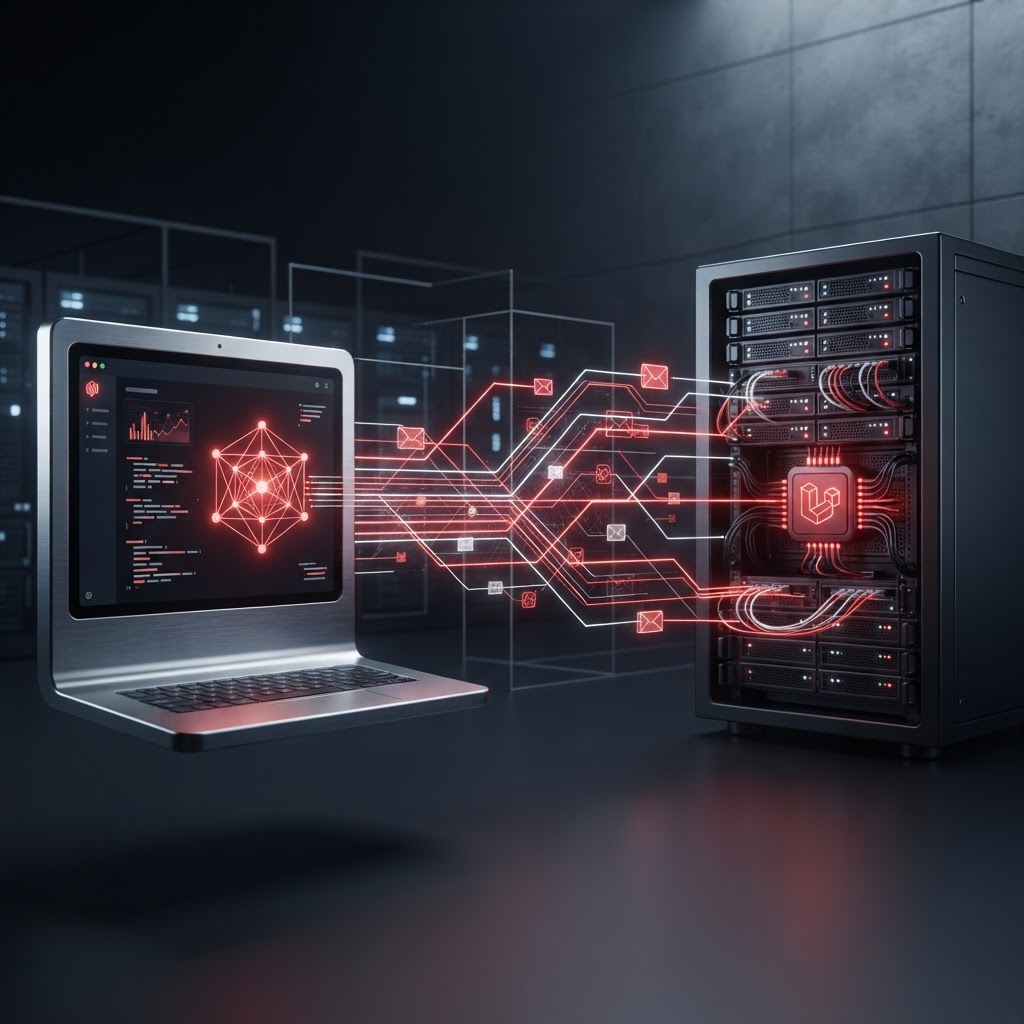
Laravel MCP 1.0 enables standardized AI-to-application communication.
- Laravel MCP 1.0 adds support for the Model Context Protocol, enabling seamless integration between Laravel applications and AI agents.
- The update introduces stateless servers, searchable tool catalogs, caching, and improved OAuth 2.1 support.
- Designed for Laravel developers, the package allows for rapid creation of AI-ready tools and resource templates.
Integrating AI with the Model Context Protocol
The Laravel team has announced the official release of Laravel MCP 1.0, a package designed to facilitate the integration of AI agents with the Laravel framework. By implementing the Model Context Protocol (MCP), this tool enables developers to create interfaces that allow AI models to interact with local or remote application data, execute code, and perform actions directly within a Laravel environment.
As AI agents move beyond simple conversational interfaces, the requirement for robust communication standards between large language models and backend infrastructure has grown. Laravel MCP serves as the bridge for these interactions, allowing developers to expose specific functionality to agents through a standardized, secure interface.
Core Features and Architecture
The 1.0 release is a significant protocol upgrade, bringing support for the MCP version released in July 2026. This version focuses on improving the stability and capability of AI-agent communication. Key technical improvements include the implementation of stateless servers, which simplifies scaling, and the introduction of a searchable tool catalog, making it easier for AI models to discover available functions within an application.
Security remains a primary focus, with the library providing built-in support for OAuth 2.1 and Laravel Sanctum. This ensures that interactions between AI agents and the application are authenticated and follow established Laravel middleware patterns. Furthermore, the inclusion of dependency injection within the MCP package allows developers to leverage the existing Laravel container, making the integration of AI capabilities both clean and testable.
Developer Experience and Tooling
Laravel has prioritized the developer experience by including several built-in utilities to assist in the construction and maintenance of AI agents:
- Tooling Infrastructure: Developers can define tools that allow AI clients to execute actions or run code securely.
- Prompt Management: The package enables the creation of reusable prompt templates to structure queries and application-specific interactions.
- Streaming Support: Through the use of Server-Sent Events, the package supports real-time streaming of updates and progress responses to AI clients.
- Testing Utilities: The release includes an MCP Inspector and unit testing capabilities, ensuring that AI-driven functionality can be verified during development.
For those looking to get started, the installation process follows standard Laravel practices, requiring only a composer command to initiate the package setup. The framework provides the flexibility to create either local servers, intended for pairing with agents like Claude Code, or remote servers that facilitate broader AI connectivity.
Moving Forward with AI
The release of Laravel MCP 1.0 demonstrates the continued trend of framework authors standardizing how applications interact with modern AI models. By focusing on the Model Context Protocol, Laravel ensures that its ecosystem remains compatible with the broader AI development landscape while maintaining the expressive syntax and productivity features for which the framework is known.
With 53 contributors already documented in the early stages, the open-source community appears focused on evolving the capabilities of the MCP package. For developers interested in extending their existing web applications into the realm of autonomous agents, the documentation and source code are available to assist in implementation and architectural planning.
Enjoyed this?
Get more posts like this delivered to your inbox.