Mirage by Strukto: A Unified Virtual Filesystem That Lets AI Agents Work Across Every Service at Once
Mirage is an open-source virtual filesystem for AI agents that mounts S3, Google Drive, Slack, GitHub, Notion, Postgres, and more side-by-side — so agents can use standard Unix commands across every service at once.
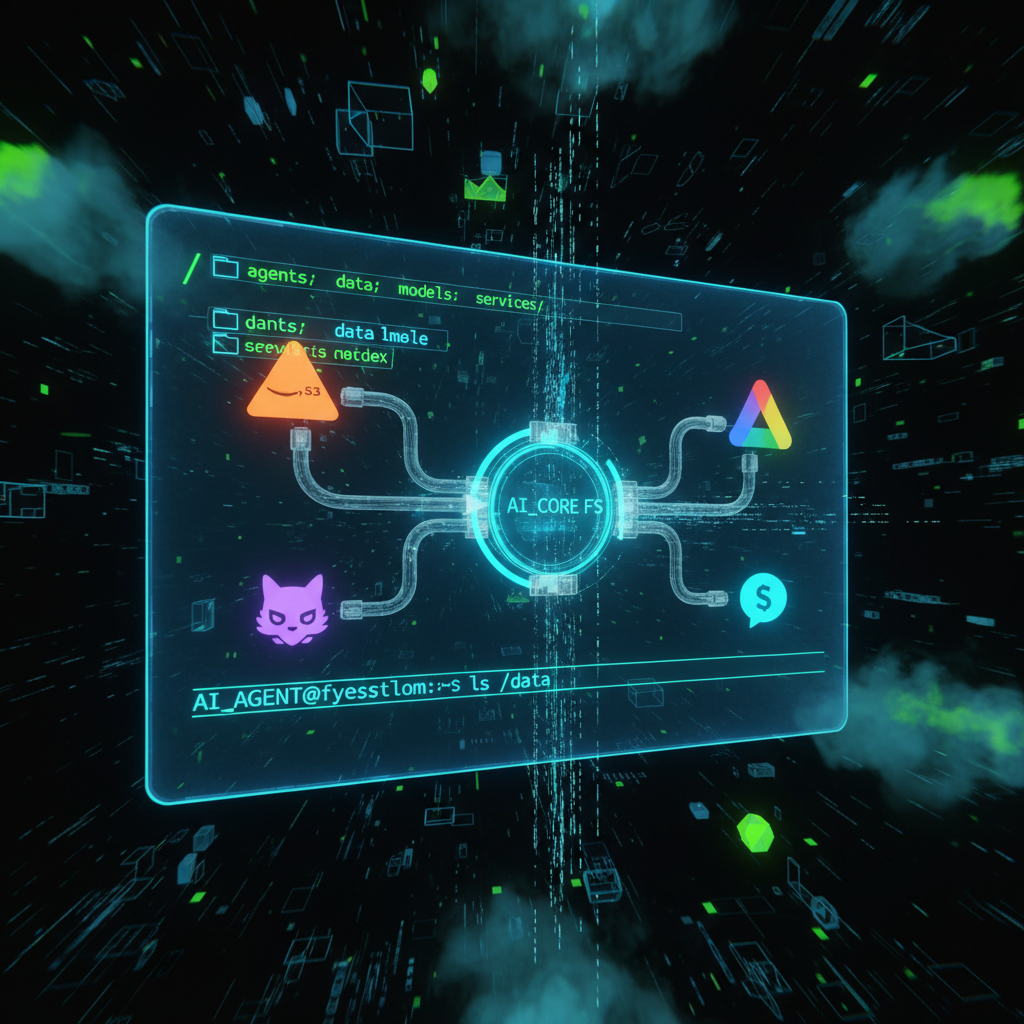
What Is Mirage?
Mirage is an open-source virtual filesystem (VFS) for AI agents, built by Zecheng Zhang (Founder at Strukto.AI, YC Alumni). After six weeks and 1.1 million lines of code, the team rewrote bash from the ground up to work across heterogeneous services — S3, Google Drive, Slack, Gmail, GitHub, Linear, Notion, Postgres, MongoDB, SSH, and more — all mounted side-by-side as a single unified filesystem.
Why This Matters for AI Agents
The fundamental problem Mirage solves is fragmentation. Today's AI agents have to learn different APIs, authentication schemes, and data formats for every service they touch. This is slow, brittle, and expensive. Mirage eliminates that complexity by exposing a single Unix-style interface: cat, grep, head, and pipes work the same way across every connected service.
Even better, Mirage understands modern file formats natively. cat can parse .parquet, .csv, .json, .h5, and even .wav files. A single pipe can stitch together data from S3, Google Drive, GitHub, Slack, and Linear — with the same Unix semantics throughout. Agents that already know bash work on every format, every service, immediately.
Key Technical Features
Mirage workspaces are fully versioned: snapshot, clone, and roll back the entire state with a single API call. A two-layer cache converts repeated reads into local lookups, keeping agent loops fast and cheap. You can drop a Workspace into FastAPI, Express, or a browser app, and wire it into OpenAI Agents SDK, Vercel AI SDK, LangChain, Mastra, or Pi. It runs alongside Claude Code and Codex out of the box.
Getting Started
Mirage is open source and available on GitHub at github.com/strukto-ai/mirage. The project site is at strukto.ai/mirage. For AI developers building agentic workflows that touch multiple data sources, this is one of the most practically useful infrastructure layers to emerge this year.
Enjoyed this?
Get more posts like this delivered to your inbox.