Khala 1.0: The Open-Source Music Generation Model From Beijing's Central Conservatory
The Central Conservatory of Music in Beijing has released Khala 1.0, a fully open-source music generation model that scales acoustic token language models toward high-fidelity output. The release includes the research paper, model weights, code, and a live demo — a complete open-source music generation stack from one of the world's leading music institutions.
What Is Khala?
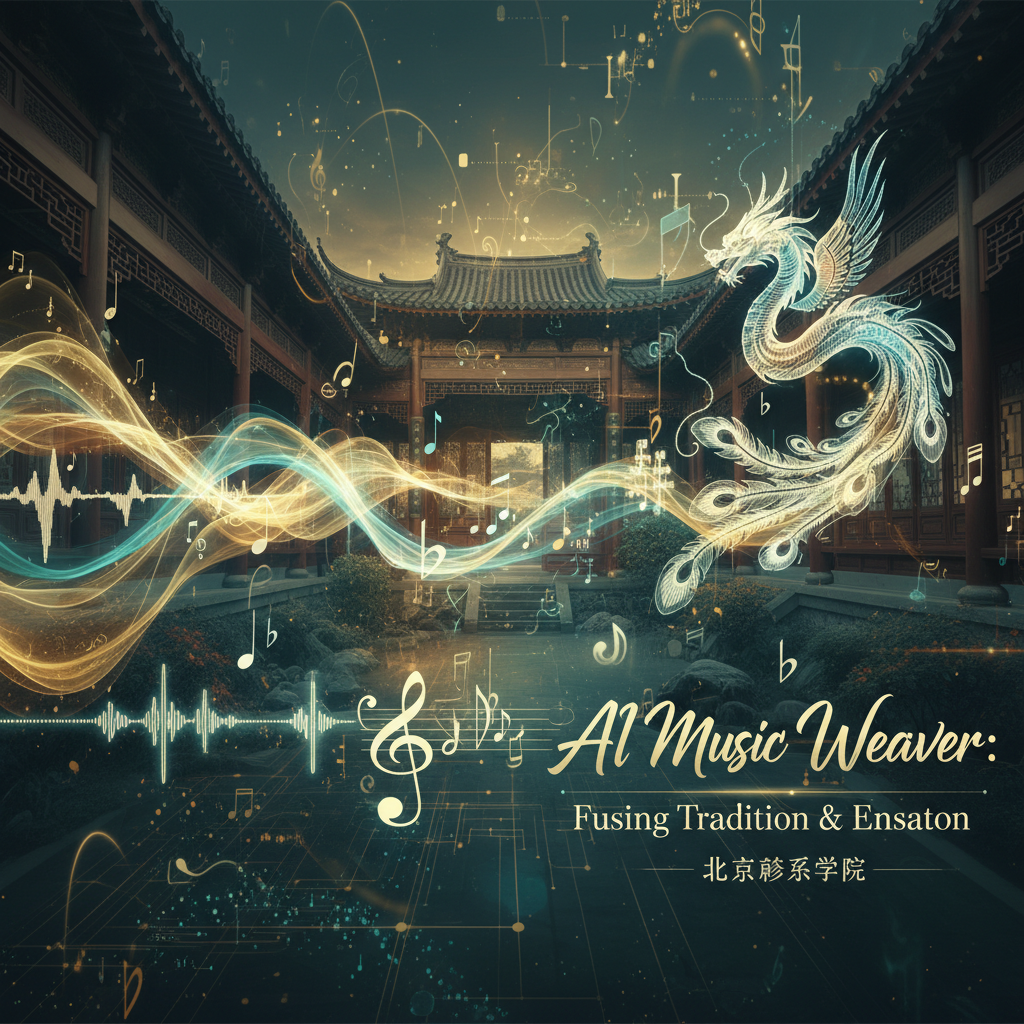
Open-source music generation just got a significant new entry. Khala 1.0 is a music generation model developed by researchers at the Central Conservatory of Music (CCOM) in Beijing — one of the most prestigious music institutions in the world. It's been released fully open-source, with paper, code, pre-trained weights, and an interactive demo all publicly available.
The full release is available at:
- Code: github.com/Khala-Music-AI/Khala
- Paper: arXiv 2605.01790
- Demo: khala-music-ai.github.io/Khala-demo
The Technical Approach
Khala's paper is titled "Scaling Acoustic Token Language Models Toward High-Fidelity Music Generation." The core approach uses a 64-layer residual vector quantization (RVQ) acoustic representation, combined with a two-stage coarse-to-fine generation process:
- Coarse generation — the model first generates a high-level acoustic structure capturing melody, rhythm, and harmonic content
- Fine-grained refinement — subsequent passes progressively fill in timbral detail and high-frequency audio characteristics
This coarse-to-fine architecture allows the model to scale effectively — generating musically coherent long-form output before committing to specific acoustic details, avoiding the incoherence that plagues single-pass audio generation at long durations.
Why a Music Conservatory?
The provenance of Khala is notable. Most music generation research comes from tech labs where the primary criterion is perceptual quality as measured by audio metrics. CCOM brings deep domain expertise in musical structure, composition theory, and acoustics — knowledge that's hard to encode in training data but crucial for generating music that sounds like music rather than audio that looks like music on a spectrogram.
Gong Junmin, an engineer at ACE Music who gave a talk at CCOM on ACE-Step, noted: "Open-source music gen is thriving" — and Khala's release adds serious momentum to that trajectory alongside projects like YuE and MusicGen.
Getting Started
Khala 1.0 is available now. Install from GitHub, listen to examples at the demo page, and read the full technical details in the arXiv paper.
Enjoyed this?
Get more posts like this delivered to your inbox.
Gemini Omni: Google DeepMind's Multimodal Model That Creates Anything From Anything
Next →llama.cpp Adds Multi-Token Prediction for Qwen3.6: A Massive Speed Boost for Local AI
Related Articles
SkillOpt: Microsoft Research's Optimizer That Trains Agent Skills, Not Model Weights
6 min read
Mobilewright: Playwright for Real Mobile Devices — Deterministic AI Agent Access to iOS and Android
4 min read