Microsoft Releases .NET Aspire 13.5 with Dashboard Refresh and Live Terminals
.NET Aspire 13.5 introduces a dashboard refresh, interactive terminal sessions, file import commands, and expanded Kubernetes and Azure deployment options.
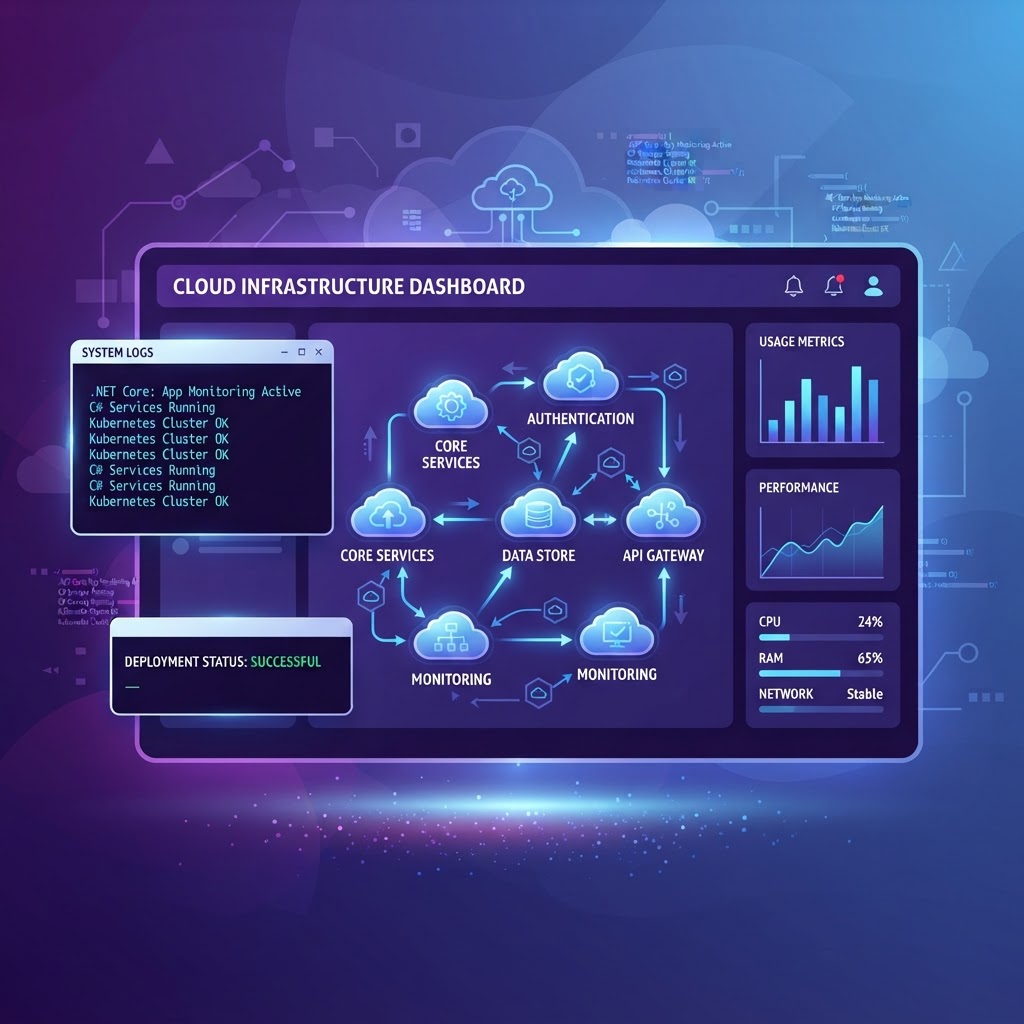
.NET Aspire 13.5 introduces a visual dashboard refresh alongside new interactive terminal and deployment capabilities.
- Microsoft has released .NET Aspire 13.5, focusing on developer experience (DX) through a refreshed dashboard and new interactive features.
- Key additions include integrated live terminal sessions in the dashboard and new file upload workflows for resource commands.
- Deployment capabilities are expanded with Kubernetes persistent volume modeling and cross-scope Azure resource references.
Overview of .NET Aspire 13.5
Microsoft has announced the release of .NET Aspire 13.5, an update focused on enhancing the developer experience through visual refinements and quality-of-life improvements. Following a period of expanding the platform's support for various languages and deployment targets, this release prioritizes usability, dashboard interactivity, and infrastructure modeling capabilities. The update aims to reduce manual configuration requirements, specifically targeting a reduction in YAML authoring for cloud-native applications.
Dashboard and UI Enhancements
The most immediate change in .NET Aspire 13.5 is a visual refresh of the developer dashboard and the official website. According to Microsoft, the update includes a new aesthetic look while maintaining existing layouts and features to ensure familiarity for current users. Accessibility remains a priority, with the development team performing contrast and accessibility audits on all updated surfaces.
Functional improvements to the dashboard include more granular telemetry management. Developers can now filter console logs using case-insensitive text searches and apply exact numeric comparisons or timestamp filters to logs and traces. The dashboard also features improved resilience, with better reconnection logic for when the resource-service connection is interrupted. Error reporting has been modified to show user-friendly health-check failures rather than raw exception stacks, and telemetry streaming now remains active even when resource filters are applied.
The Interaction Service and File Management
The Interaction Service, which allows the AppHost to interact directly with developers, has received significant updates. In version 13.5, Microsoft added support for file imports within resource commands. This allows developers to create commands, such as configuration importers, that trigger a file picker within the dashboard. The system supports JSON and YAML formats, allows for size limits, and provides a stream directly to the AppHost.
Furthermore, the update introduces the ability for resource commands to declare named arguments. These arguments appear as input controls in the dashboard UI and as specific options when using the Command Line Interface (CLI). For long-running processes, developers can now implement progress dialogs that include optional cancellation functionality. While the core Interaction Service and file input APIs are considered stable, the progress dialog features currently utilize the ASPIREINTERACTION001 experimental diagnostic.
Integrated Terminal Sessions
A major feature addition in .NET Aspire 13.5 is the introduction of live terminal sessions directly within the dashboard. Previously, interactive tools like REPLs (Read-Eval-Print Loops) or shells required a separate terminal window. With the new WithTerminal() extension method, resources can host an interactive terminal session that accepts standard input (stdin) and provides standard output (stdout).
This feature allows multiple viewers to attach to the same session simultaneously, meaning a developer can monitor a process from both the dashboard and a local shell. Microsoft notes that these terminal-enabled resources currently run as plain processes, requiring manual debugger attachment if needed. The aspire terminal CLI commands, which allow for listing and attaching to sessions, are currently experimental in this release.
Kubernetes and Azure Deployment Updates
Infrastructure modeling within the AppHost has been expanded to better support production environments. For Kubernetes deployments, .NET Aspire 13.5 introduces APIs for persistent volume modeling. Developers can now define a KubernetesEnvironment and configure persistent volumes with specific storage classes, capacities, and access modes (such as ReadWriteOnce). When these volumes are bound to a project or container, Aspire automatically generates the necessary persistent volume claims and renders the workload as a StatefulSet to ensure data durability.
For Azure users, the update simplifies the process of referencing existing infrastructure. New methods including AsExistingInResourceGroup(...), AsExistingInSubscription(...), and AsExistingInTenant(...) allow applications to connect to shared resources, such as a Service Bus namespace, that may reside outside of the application's primary resource group or subscription. This capability is supported in both run-mode and publish-mode scenarios.
Experimental Features and Documentation
Several features in version 13.5 are categorized as experimental and require specific diagnostics to be enabled. These include the compute-environment persistent volume APIs (ASPIRECOMPUTE002) and the integrated terminal commands. Microsoft encourages developers to consult the full migration notes and breaking changes listed in the official documentation for a complete inventory of the 13.5 release components.
Enjoyed this?
Get more posts like this delivered to your inbox.