Cognition Details Devin Fusion: A Hybrid-Model Harness for Agentic Coding
Cognition's new Devin Fusion architecture uses parallel agents and dynamic mid-session routing to reduce frontier model coding costs by 35 percent.
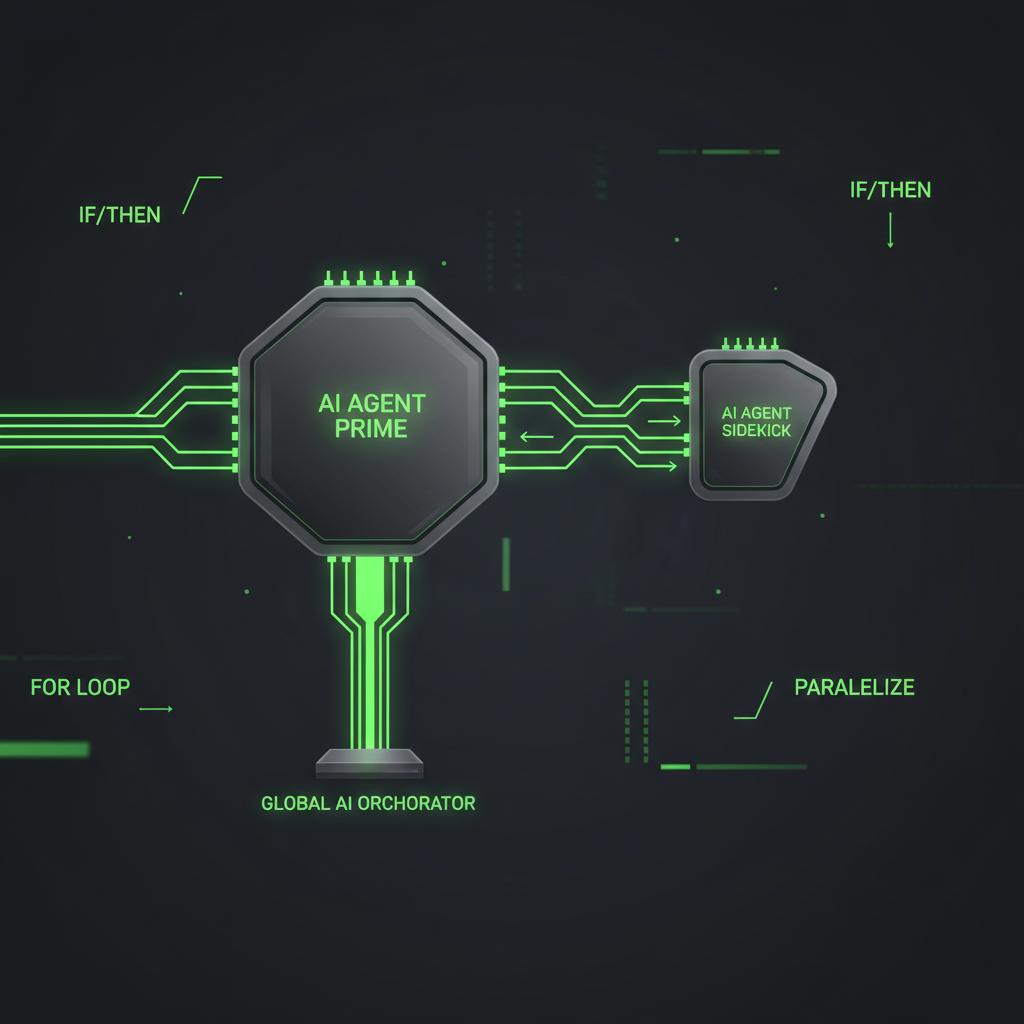
Diagram representing the multi-model sidekick architecture utilized by Devin Fusion.
- Cognition introduces Devin Fusion, a multi-model harness combining frontier models with cheaper sidekick agents.
- The system achieves a 35% average cost reduction on the FrontierCode benchmark while maintaining state-of-the-art performance.
- Parallel agent caching and dynamic mid-session routing during context compaction mitigate the high costs typically associated with model-switching.
- Testing indicates the approach excels at mechanical coding tasks but underperforms when architectural judgment is delegated to the sidekick.
On June 29, 2026, Cognition published details regarding Devin Fusion, a hybrid-model harness designed to manage the prohibitive costs associated with using frontier-level AI models for comprehensive software engineering tasks. The system addresses a documented limitation in existing model routers, which frequently optimize for benchmark scores but struggle to produce functional, merge-ready code in real-world scenarios.
The Parallel Sidekick Architecture
The core mechanic of Devin Fusion relies on a parallel multi-agent system. Instead of assigning a task to a single model, the harness deploys two distinct agents simultaneously: one powered by a frontier-tier model and another driven by a more cost-effective "sidekick" model. Both agents possess their own autonomous toolsets and independently gather context to act on the task at hand.
Under this architecture, the main frontier agent limits its direct actions. It is configured to handle high-level project planning, interpret task ambiguities, and conduct final code reviews. The execution of mechanical sub-tasks is subsequently delegated to the sidekick. Cognition reports that this division of labor bypasses the generalization failures seen in traditional single-prompt routing systems, where initial prompts lack the detail necessary to accurately assess a task's true difficulty over time.
A significant technical hurdle addressed by Devin Fusion involves context caching. Earlier inter-model delegation mechanisms—such as Anthropic's "Advisor" tool or Cognition's experimental "Smart Friend" concept—incurred expensive cache misses whenever one model queried another, as context was not persistently shared. Devin Fusion resolves this by maintaining persistent, independent cached contexts for both the primary and sidekick models throughout the session.
Dynamic Mid-Session Routing and Context Compaction
Selecting the optimal model configuration at the initiation of a task can lead to inefficiencies if the complexity of the request evolves. To address this, Devin Fusion integrates lightweight classifiers that monitor task execution. These classifiers can dynamically signal the system to switch back to the main agent if the sidekick encounters unexpected difficulty, or vice versa.
To perform these swaps without incurring severe financial penalties from cache drops, Cognition engineers aligned model-switching with the system's existing context compaction cycles. Since compacting context natively triggers a cache miss, the system utilizes this required disruption to simultaneously re-evaluate and swap the active model. This mechanism essentially allows for mid-session model upgrades or downgrades at no additional cache penalty.
Benchmark Performance and Task Analysis
Cognition evaluated the harness using FrontierCode, a benchmark designed to measure code correctness and overall quality. When tested alongside frontier models like GPT-5.5 and Opus 4.8, Devin Fusion demonstrated a 35% reduction in cost while preserving top-tier scoring.
The company provided specific examples of sidekick deployment outcomes:
- Cost Savings on Mechanical Testing: Refactoring a Javascript file to ES6 and verifying it against a slow end-to-end test suite resulted in a 62% cost reduction (dropping from $3.55 to $1.37) while slightly increasing the benchmark score. The primary savings occurred because test execution was fully offloaded.
- Standard Code Removal: Deprecating an OpenTracing integration across multiple Go files yielded a 32% cost saving ($3.80 to $2.57) with only a nominal one-point drop in quality score.
- Delegation Failures: Applying the sidekick to a complex TypeScript feature involving React and Redux state management proved detrimental. Because the task relied heavily on subtle architectural judgment, delegating the core coding work dropped the resulting score by half, despite saving 28% in API costs.
- Complex but Routine Integrations: Integrating a WebSocket transport in Java remained highly successful under the sidekick model, lowering costs by 25% and actually improving the benchmark score compared to utilizing the standalone Devin agent.
Fable 5 Integration and Operational Status
Testing configurations involving the Fable 5 model produced the most notable margins, exhibiting a 41% cost reduction compared to a pure Fable 5 harness. Cognition noted that Fable 5 displayed specific proficiencies in multi-agent environments, such as superior task delegation and efficient context requests.
It is important to note that access to Fable 5 was suspended on June 12, 2026, following a United States government directive. As a result, the published data regarding Fable 5 is based on measurements captured prior to the suspension. Cognition stated their intention to reinstate Fable 5 into the Devin Fusion system if public access is restored.
Internal sanity checks prior to public preview indicated strong adoption within Cognition's own development environment, with the company reporting that 88% of internally merged pull requests were completed entirely by the automated Fusion router. As engineering organizations face rising operational costs tied to frontier model inference, hybrid solutions like Devin Fusion represent a practical step toward scaling automated code generation.
Enjoyed this?
Get more posts like this delivered to your inbox.