AWS Introduces Amazon S3 Annotations for Scalable, Mutable Object Metadata
AWS has released Amazon S3 Annotations, allowing up to 1GB of mutable, structured metadata per object to support AI agents and analytics workflows.
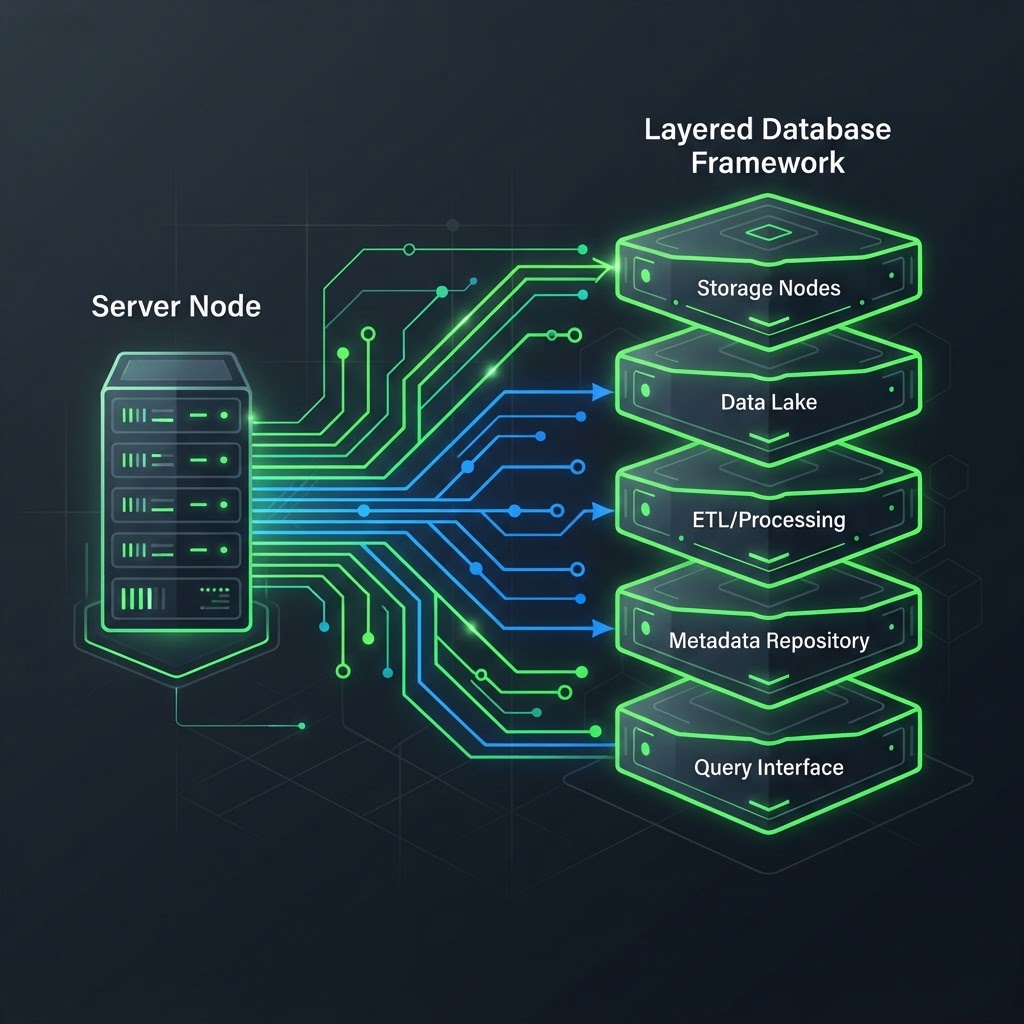
Amazon S3 Annotations introduces large-scale, mutable metadata for object storage, enabling seamless integration with AI and analytics engines.
- Amazon S3 now supports Annotations, allowing up to 1,000 mutable metadata entries (up to 1GB total) per object.
- Annotations accept structured data formats including JSON, XML, and YAML to provide business context for AI agents and analytics platforms.
- Through the S3 Metadata feature, annotations are automatically stored in Apache Iceberg tables, making them queryable via Amazon Athena, Redshift, and the S3 Tables MCP server.
Amazon Web Services (AWS) has announced the general availability of Amazon S3 Annotations, a feature designed to expand how technical and business context is attached to data within its object storage service. The update allows engineering teams to append rich, searchable, and structured metadata directly to S3 objects. This feature is intended to reduce the reliance on external, separately maintained metadata databases by bringing high-capacity context directly into the storage layer.
Overcoming Previous Metadata Limitations
Historically, Amazon S3 has offered three mechanisms for storing object-level context: system-defined metadata (which captures properties such as file size and storage class), object tags (used primarily for access control and lifecycle management), and user-defined metadata. While functional, these options carry strict technical limitations. Object tags are capped at 10 per object, and user-defined metadata is restricted to 2 KB of headers and is immutable, meaning it can only be set at the time of upload.
Amazon S3 Annotations introduces a new tier of capacity and flexibility. AWS allows up to 1,000 individual annotations per object, with a combined data limit of 1 GB. Because annotations are written in standard formats like JSON, XML, or YAML, they can accommodate complex, nested business logic, compliance records, or AI-generated data summaries.
Critically, S3 Annotations are mutable. Daniel Abib, a senior specialist solutions architect at AWS, noted that annotations provide "metadata capabilities at a fundamentally different scale and flexibility, offering mutable, queryable context per object." Previously, updating an object's custom metadata required retrieving the entire object and rewriting it to S3. With annotations, developers can modify or delete metadata independent of the underlying object. This operational shift was highlighted by community members as a significant workflow improvement, avoiding the compute and bandwidth costs associated with full object rewrites.
Integration with Analytics and AI Agents
To make the expanded metadata useful across massive datasets, AWS introduced a corresponding query layer called S3 Metadata. When users enable annotation tables on an S3 bucket, the annotations are automatically aggregated and stored in fully managed, read-only Apache Iceberg tables.
Mai-Lan Tomsen Bukovec, Technology VP at AWS, explained the architecture: "When you enable annotation tables on a bucket, every annotation flows automatically into a fully managed Iceberg table. You can query across all your objects with Amazon Athena, Amazon Redshift or any Iceberg-compatible engine."
Beyond traditional analytics, AWS has tailored this release for agentic AI workflows. AI agents can discover and search through objects using natural language via Amazon SageMaker Unified Studio. Additionally, integration with the S3 Tables MCP (Model Context Protocol) server enables developers to connect annotations directly into integrated development environments (IDEs) and LLM-driven applications.
Cost Structure and Operations
While S3 Annotations remove the need to deploy distinct database solutions like Amazon DynamoDB solely for object tracking, organizations must account for the specific billing mechanisms AWS has implemented. Annotations share the same durability properties as their host objects and move alongside them during replication operations.
In terms of storage costs, annotations are billed strictly at S3 Standard rates, regardless of whether the base object is stored in a lower-cost tier like S3 Glacier. Furthermore, the operational execution carries a cost: every time an object is copied and its annotations are replicated, each annotation copy is billed as a separate PUT request.
Corey Quinn, Chief Cloud Economist at The Duckbill Group, commented on the pricing model, noting that while vertical integration simplifies architecture, users are now paying Athena execution costs to read the data back out, and bearing the cost of PUT requests for the "object store within an object store" approach.
Availability and Use Cases
AWS has made S3 Annotations generally available in all AWS Regions, including AWS China Regions. The accompanying annotation tables function is available in all regions where S3 Metadata is currently supported.
The system is targeted toward data-heavy industries such as life sciences, media, and financial services. Potential use cases include embedding compliance audit trails directly into financial records, storing transcriptions and summaries alongside raw media files, or appending AI-generated insights to analytical datasets without breaking the native object storage lifecycle.
Enjoyed this?
Get more posts like this delivered to your inbox.