Prime Intellect Releases Prime Agent Self-Improving RLM Framework
Prime Intellect has launched Prime Agent, an open-source self-improving agent framework based on Recursive Language Models and Continual Harness architectures.
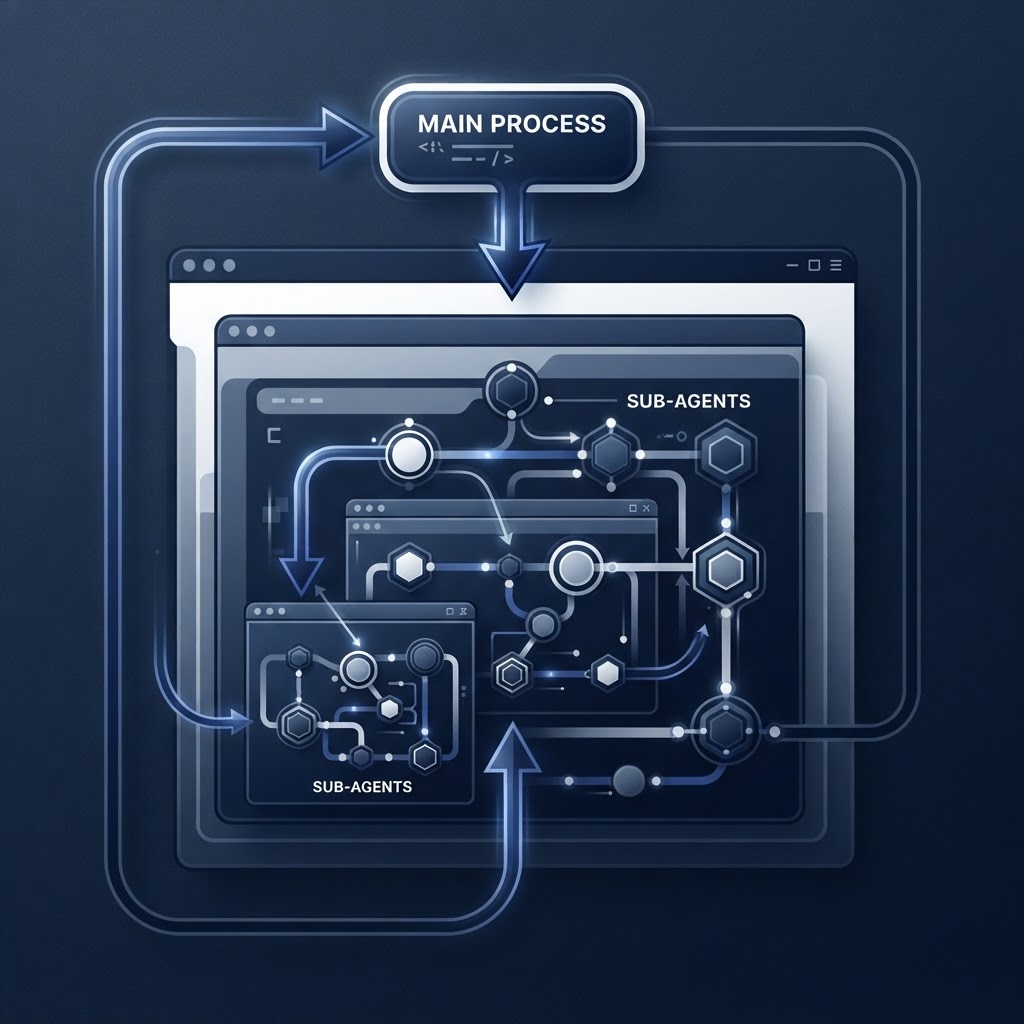
Prime Agent introduces a recursive architectural approach to autonomous agent orchestration and self-improvement.
- Prime Agent is an open-source coding and research harness designed for long-horizon autonomous tasks.
- The framework utilizes a Recursive Language Model (RLM) abstraction that treats sub-agents as programmatic function calls within a persistent IPython REPL.
- Equipped with Opus 5, the system achieved 95.5% on the ARC-AGI-3 benchmark, exceeding the reported human expert baseline.
Introduction to Prime Agent
On August 5, 2026, Prime Intellect announced the release of Prime Agent, an open-source coding harness designed to leverage the reasoning capabilities of modern frontier language models. The system is built around two primary technical abstractions: the Recursive Language Model (RLM) and the Continual Harness. Unlike traditional agent frameworks that rely on fixed tool-calling schemas and static prompts, Prime Agent allows for the programmatic creation, modification, and orchestration of sub-agents and memory states.
The project is available under the MIT License and is designed for general coding workflows, autonomous evaluation, and research collaboration. According to the development team, Prime Agent was created to address the limitations of earlier harness designs that often force models to work around rigid scaffolding rather than leveraging it for complex reasoning.
The Recursive Language Model (RLM) Abstraction
The core of Prime Agent is the Recursive Language Model, which conceptualizes context as a variable and sub-agent delegation as standard function calls. This is implemented through a persistent IPython REPL (Read-Eval-Print Loop) that provides the model with programmatic access to its own history, tools, and child agents. By writing language model programs as actions over its own context, the agent can navigate long-duration sessions without losing access to historical data stored in variables.
Programmatic Tool Calling (PTC)
In this architecture, the IPython kernel serves as the primary tool. Standard agent functions, such as file manipulation or shell commands, are executed as Python functions within this kernel. This allows models to parallelize tasks and manage sub-agents asynchronously. For example, a root agent can spawn a sub-agent using an await rlm() call, which returns a child handle while the sub-agent performs its task in the background. Communication between these agents occurs through a dedicated messaging protocol (agent_message.send), allowing for complex orchestration without user intervention.
Continual Harness and Durable State
The second major abstraction, the Continual Harness, treats the agent's internal state—including prompts, skills, and memory—as a set of resources that can be refined through CRUD (Create, Read, Update, Delete) operations. This allows the agent to update its operating patterns based on evidence gathered during its trajectory. Through the /refine command, the system can apply updates to supplemental harness state while keeping the base system prompt immutable. This ensures that reusable patterns and lessons learned during a session can persist and be applied to future tasks.
Session and Memory Management
To handle long-running tasks, Prime Agent implements a background daemon that manages all active sessions over a local socket. This allows users to attach or detach from a terminal session without interrupting the underlying agent loop. The system records session history as append-only JSONL files, enabling recovery from crashes by replaying the session state and kernel snapshots. For memory efficiency, sub-agents that remain inactive for more than 30 minutes are removed from memory and reloaded from disk only when addressed by another agent or the user.
Benchmarking and Performance
Prime Intellect reported that Prime Agent, when utilizing the Opus 5 model, achieved a score of 95.5% on the ARC-AGI-3 benchmark. This figure is notable for surpassing the established human expert baseline for the benchmark. The developers attribute this performance to the synergy between the harness design and the capabilities of current-generation frontier models, specifically their ability to operate within programmatic environments like IPython.
Deployment and Security Considerations
Prime Agent is compatible with macOS and Linux and can be installed via a shell script provided by Prime Intellect. Once installed, the prime-agent command allows users to initiate sessions in local directories, browse running agents, and resume saved sessions. The framework supports various modes, including a text-user interface (TUI) for interactive use and headless modes (JSON/RPC) for automation.
However, the documentation includes a security warning regarding the execution of model-generated code. Because Prime Agent executes Python and shell commands with the user's permissions, it does not function as a security sandbox. Users are advised to run the agent in restricted environments or external sandboxes when dealing with untrusted code or repositories.
Enjoyed this?
Get more posts like this delivered to your inbox.