Poetiq's Recursive Self-Improvement Tops LiveCodeBench Pro: Flash Model Beats Gemini Deep Think
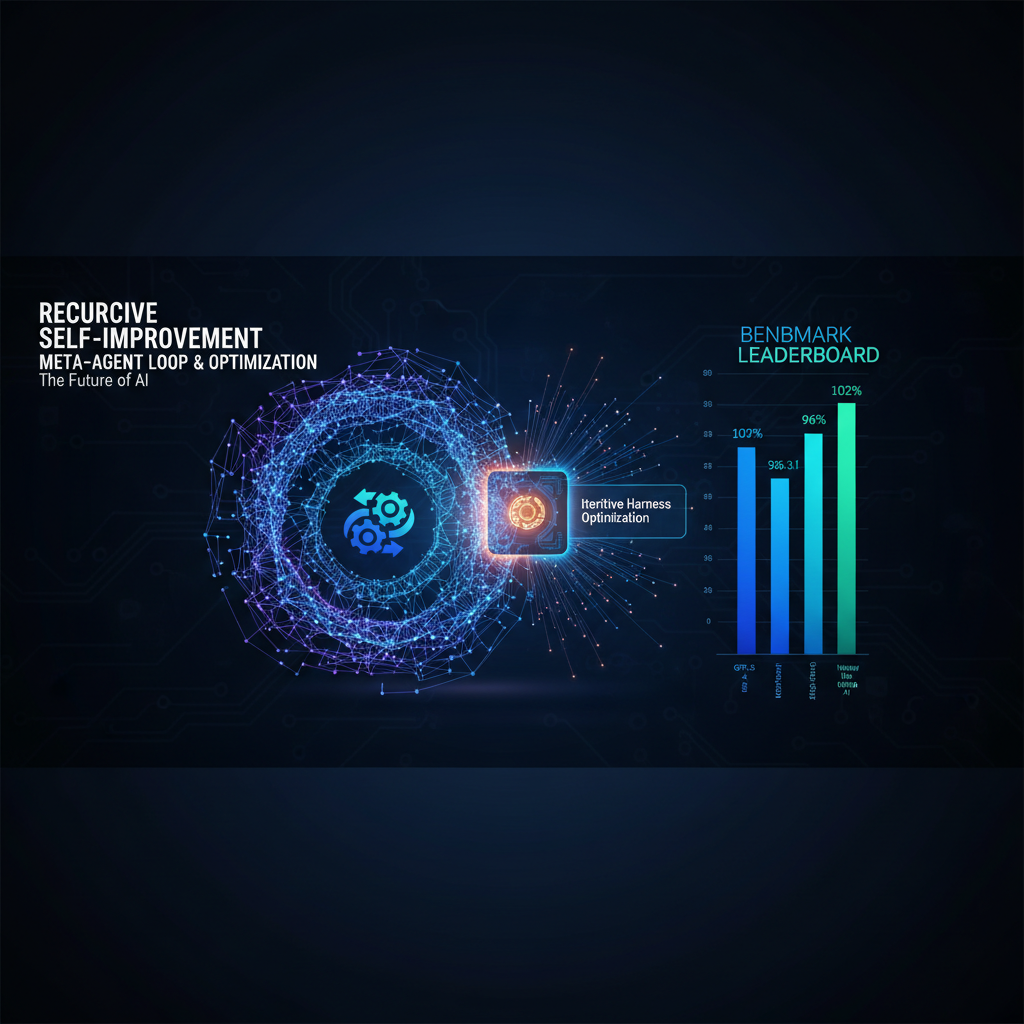
Poetiq's Meta-System has set a new state-of-the-art on LiveCodeBench Pro (LCB Pro) by automatically constructing and optimizing a coding harness through recursive self-improvement. The system improved Gemini 3.1 Pro by 12.3%, pushed GPT-5.5 to 93.9%, and surpassed Google's own Gemini Deep Think — all without fine-tuning or privileged model access.
What Did Poetiq Actually Do?
Poetiq ran their Meta-System on LiveCodeBench Pro (LCB Pro) — an authoritative coding benchmark specifically designed to resist LLM data contamination. Problems come from major competitive programming contests, require both correctness and satisfying runtime/memory constraints, and the ground-truth code is never published. It's one of the hardest public benchmarks for raw AI coding ability.
Rather than fine-tuning a model, Poetiq's Meta-System was given the task of building its own test harness from scratch — and then recursively improving it. The result: a new state-of-the-art across every model tested.
The Numbers
The leaderboard results (LCB Pro 25Q2) with Poetiq's harness applied:
- Poetiq + GPT-5.5: 93.9% — new overall SOTA, up from GPT-5.5's baseline of 89.6%
- Poetiq + Gemini 3.1 Pro: 90.9% — up from 78.6%, a +12.3% improvement, surpassing GPT-5.5 bare
- Gemini Deep Think: 88.8% — surpassed by both Poetiq configurations
- Poetiq + Gemini 3.0 Flash: 82.3% — a smaller, cheaper model beating Claude Opus 4.7 and GPT-5.2 High
- Poetiq + Kimi K2.6: 79.9% — a remarkable ~30% jump from Kimi's 50.0% baseline
How Recursive Self-Improvement Works Here
The Meta-System was given only standard API access to Gemini 3.1 Pro and the LCB Pro benchmark interface. It then:
- Built an initial harness for the benchmark from scratch
- Evaluated performance and identified failure modes
- Iteratively refined the harness — optimizing prompting strategy, chain-of-thought structure, solution verification, and memory/runtime constraint handling
- Incorporated learnings from previous benchmarks (ARC-AGI, HLE) to accelerate optimization
Critically, once optimized for Gemini 3.1 Pro, the harness was applied to other models without modification — and improved them all. This model-agnostic transferability is a key differentiator from fine-tuning.
Why This Matters
The standard path to better model performance is more training, more compute, and more human labeling. Poetiq's approach inverts this: instead of improving the model, improve how the model is used — and do it automatically. The fact that a harness optimized for one model (Gemini 3.1 Pro) also improved GPT-5.5 by 4.3% and Kimi K2.6 by ~30% suggests the Meta-System is discovering genuinely better problem-solving strategies, not just model-specific tricks.
Read the full write-up at poetiq.ai.
Enjoyed this?
Get more posts like this delivered to your inbox.
NVIDIA Launches Verified Agent Skills: Transparency and Security for Agentic AI Pipelines
Next →AstraFlow: Infini-AI-Lab's Open-Source Dataflow RL System for Multi-Agentic LLM Training