HKUDS Releases DeepCode v2 Open-Source Coding Agent
HKUDS has released DeepCode v2, an open-source coding agent designed for real-world software engineering with continuous loop engineering and verified delivery.
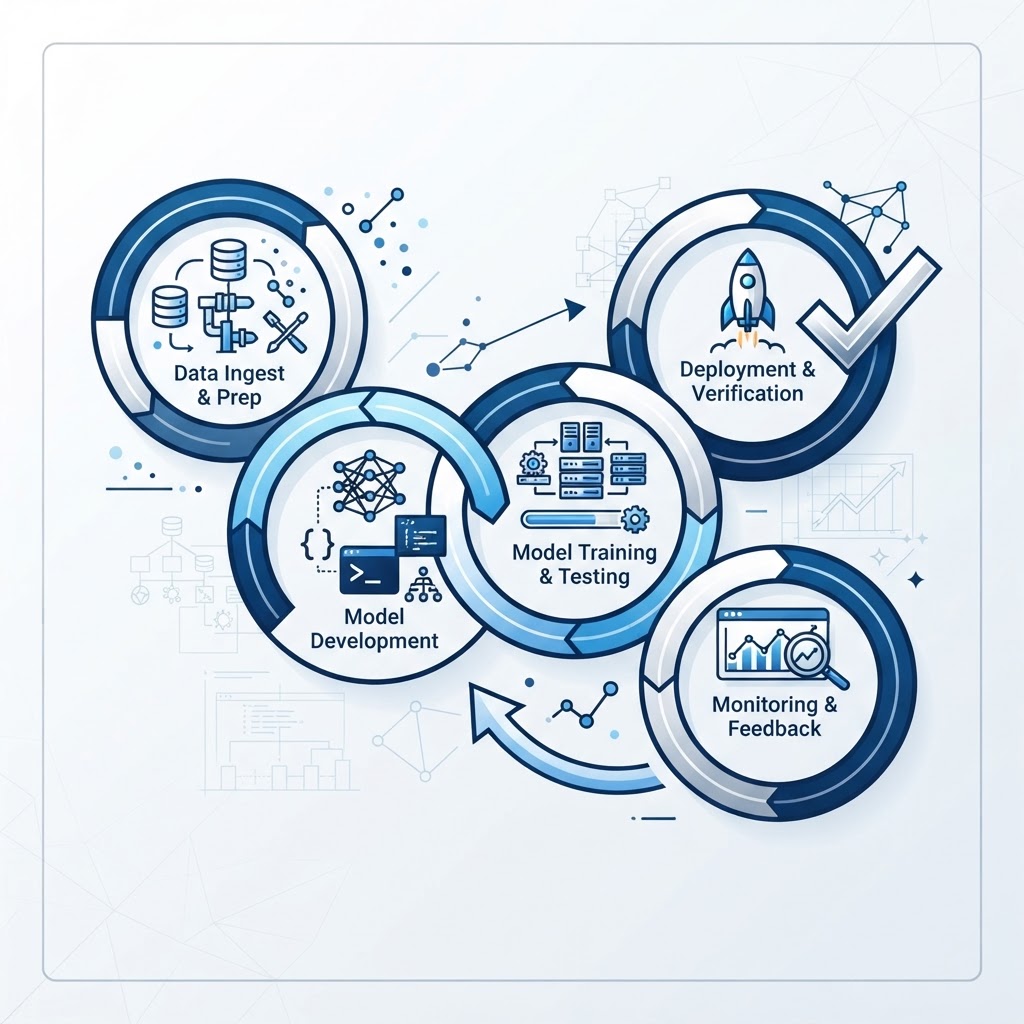
HKUDS DeepCode v2 introduces a loop-based architecture for autonomous code verification and repair.
- HKUDS has officially released DeepCode v2, a general-purpose coding agent for complex software engineering tasks.
- The update introduces 'Loop Engineering,' allowing the agent to continuously verify and repair code based on execution results.
- New features include verified delivery with test evidence, human-in-the-loop control, and a unified CLI and Desktop experience.
Overview of the DeepCode v2 Release
The University of Hong Kong Data Science lab (HKUDS) has announced the release of DeepCode v2, a significant update to their open-source coding agent. DeepCode v2 is positioned as a general-purpose tool specifically designed to address the challenges of real-world software engineering, where simple code generation often falls short of production requirements. The release emphasizes reducing the manual effort required from developers to prompt, verify, and maintain codebases when interacting with artificial intelligence.
According to the project maintainers, while modern Large Language Models (LLMs) are capable of generating high-quality code snippets, they often struggle with the iterative nature of software development. Developers frequently encounter issues where complex tasks stop midway, requiring repetitive prompting to proceed. Furthermore, generated code may look syntactically correct but fail during builds, tests, or runtime. DeepCode v2 attempts to mitigate these issues by integrating execution and verification directly into the agent's workflow.
Loop Engineering and Continuous Execution
A core architectural shift in DeepCode v2 is the introduction of what the developers term 'Loop Engineering.' In traditional AI coding assistants, the interaction is often transactional: a user provides a prompt, and the agent provides a response. If the response contains errors, the user must manually provide feedback in a new prompt. DeepCode v2 changes this dynamic by allowing the agent to continuously process a natural-language goal through a cycle of understanding, implementation, verification, and repair.
In this loop, the agent does not stop after producing an initial code block. Instead, it continues to progress based on real-world execution results. If a task fails a build or a test, the agent analyzes the error output and attempts to repair the code autonomously. This persistence is intended to ensure that the final output is not just a suggestion, but a verified solution that aligns with the user's original goal. By automating the 'fix-test-repeat' cycle, the agent aims to reduce the frequency of manual interventions during development.
Human-in-the-Loop Control and Verification
Despite the focus on automation, DeepCode v2 introduces granular control mechanisms for developers. The update allows users to add new requirements or revise the primary goal while the agent is actively running. Developers can pause, resume, or change the direction of the agent's tasks without losing the work already completed. This capability is designed to make the agent a collaborative partner rather than a black-box tool, acknowledging that software requirements often evolve as a task progresses.
Another functional improvement is 'Verified Delivery.' Rather than delivering only source code changes, DeepCode v2 provides execution evidence alongside the modifications. This evidence includes the results of commands, tests, and builds performed by the agent during the task. For engineering teams, this facilitates a more efficient review process, as the evidence provides immediate validation that the proposed changes function as intended within the project's specific environment. This focus on validation is intended to make merging AI-generated code safer and faster for maintainers.
Personalized Automation and Unified Experience
DeepCode v2 expands its utility beyond active coding tasks into the realm of repository maintenance. The platform allows developers to create project-specific tasks using natural language. these tasks can be executed manually or scheduled to run at specific intervals. Potential use cases for this automation include regression checks, test repairs, documentation synchronization, and general repository maintenance. By automating these recurring tasks, the tool seeks to free developers to focus on higher-level design and decision-making.
The release also addresses the workflow fragmentation that can occur when switching between different development environments. DeepCode v2 offers a unified experience across both Command Line Interface (CLI) and Desktop applications. The project structure, active sessions, ongoing goals, and execution histories are synchronized across both interfaces. This continuity helps prevent context loss when a developer moves from a terminal-based workflow to a graphical environment, ensuring that the agent maintains a consistent understanding of the task at hand regardless of the entry point.
Availability and Open Source Contribution
The source code and installation assets for DeepCode v2 are available on GitHub under the HKUDS organization. The maintainers have encouraged the open-source community to participate in the project's growth by providing feedback, opening issues, and contributing to the codebase. The release marks a move toward more autonomous, repository-aware agents that prioritize completed work over mere code generation, reflecting a broader trend in the software industry toward AI tools that can interact deeply with local development environments.
Enjoyed this?
Get more posts like this delivered to your inbox.


